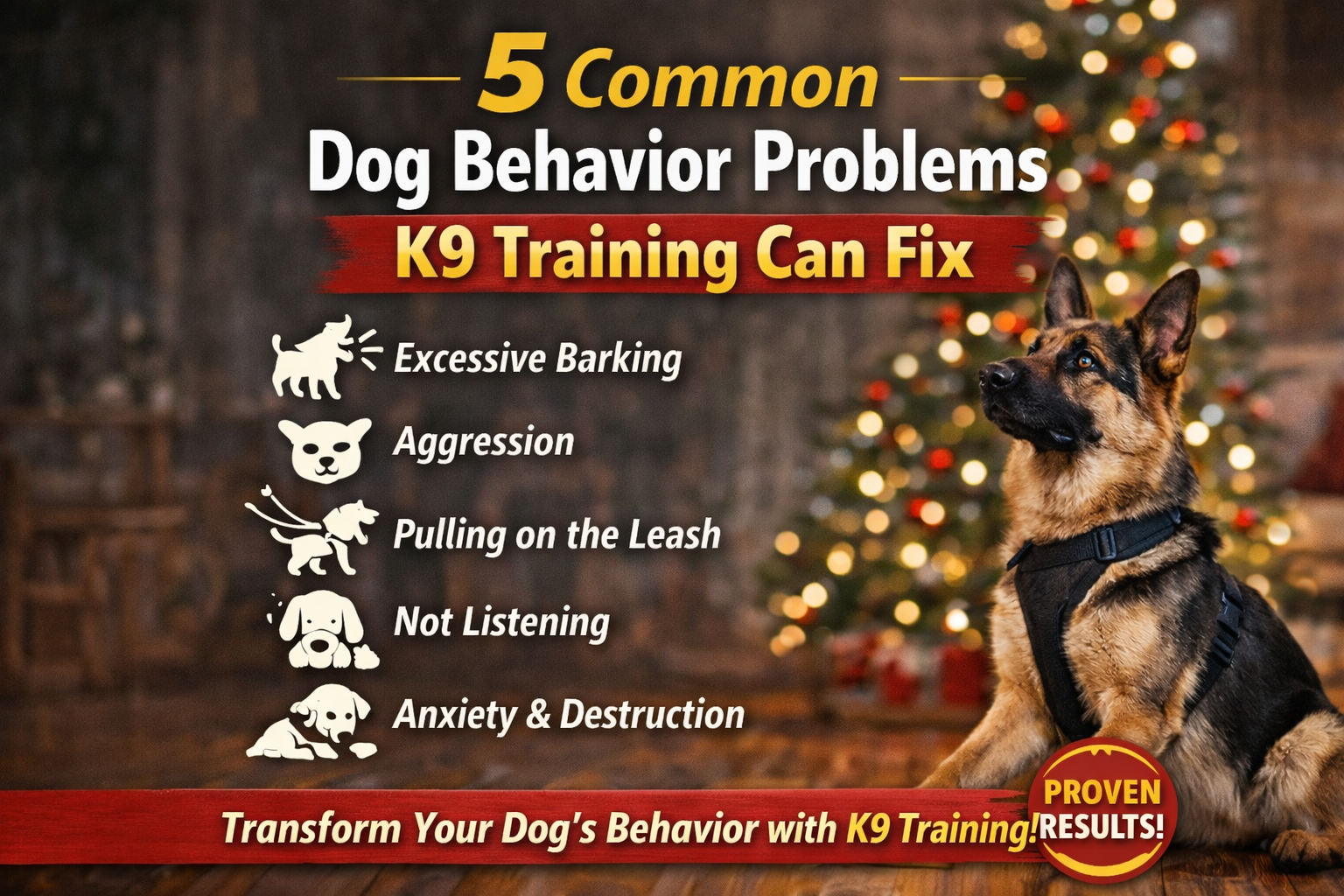
If youโre struggling with your dogโs behavior, youโre not alone. Many dog owners deal with issues like excessive barking, aggression, or a dog that simply refuses to listen. Traditional training methods donโt always workโespecially for strong-willed or anxious dogs.
This is where K9 training stands out. Based on proven discipline and obedience techniques, K9 training focuses on structure, consistency, and communication. Letโs explore five common dog behavior problems K9 training can fix effectively.
Constant barking can quickly become frustratingโfor you and your neighbors. Dogs bark for many reasons: boredom, anxiety, fear, or lack of leadership.
How K9 Training Helps:
K9 training teaches dogs impulse control and calm behavior. Instead of reacting to every sound or movement, your dog learns when itโs appropriate to stay quiet and relaxed.
โ Builds focus
โ Reduces anxiety-based barking
โ Improves owner-dog communication
Aggression is one of the most serious behavior issues dog owners face. Whether itโs growling, snapping, or lunging, aggressive behavior often comes from fear, dominance confusion, or lack of boundaries.
How K9 Training Helps:
K9 training establishes clear leadership and structure, helping dogs feel secure. When dogs understand their role, aggressive tendencies often decrease significantly.
โ Teaches calm responses
โ Reduces fear-driven reactions
โ Builds confidence and control
Walking your dog shouldnโt feel like a workout. Leash pulling is usually caused by excitement, lack of training, or poor leash habits developed early on.
How K9 Training Helps:
K9 training focuses on heel work and controlled walking, teaching dogs to walk calmly beside their owners instead of pulling ahead.
โ Improves leash manners
โ Makes walks enjoyable
โ Strengthens obedience
Does your dog ignore you unless treats are involved? This is a common issue when training lacks consistency or structure.
How K9 Training Helps:
K9 training builds obedience based on respect and repetitionโnot bribery. Dogs learn to respond to commands reliably, even in distracting environments.
โ Strong recall
โ Better response to commands
โ Improved discipline
Chewing furniture, digging, or pacing can all be signs of anxiety. Dogs that lack mental stimulation or structure often develop destructive habits.
How K9 Training Helps:
By providing mental engagement, routine, and leadership, K9 training reduces stress and channels your dogโs energy positively.
โ Reduces separation anxiety
โ Prevents destructive habits
โ Creates a calmer dog
K9 training is especially effective for:
Stubborn or strong-willed dogs
Dogs with behavioral issues
Owners who want long-term results
Dogs that failed traditional training
If youโre looking for a proven K9 training program you can follow at home, check out this highly recommended option:
Every dog can learn better behaviorโwith the right guidance. K9 training focuses on discipline, clarity, and trust, helping dogs become calmer, more obedient, and more confident.
If youโre tired of repeating commands or dealing with behavior problems, K9 training may be the solution your dog needs.
Yes, K9 training techniques can be adapted for small, medium, and large dog breeds. The focus is on structure, discipline, and communication rather than breed-specific behavior.
ย
Many dog owners notice improvements within a few weeks, especially with consistent practice. Long-term results depend on repetition and commitment.
ย
Yes. Many modern K9 training programs are designed for home use, making them convenient and cost-effective for dog owners.
ย
K9 training is often recommended for dogs with aggression issues because it focuses on leadership, confidence-building, and controlled behavior.
ย
No. Most K9 training programs are beginner-friendly and guide owners step-by-step.
Post Comment