
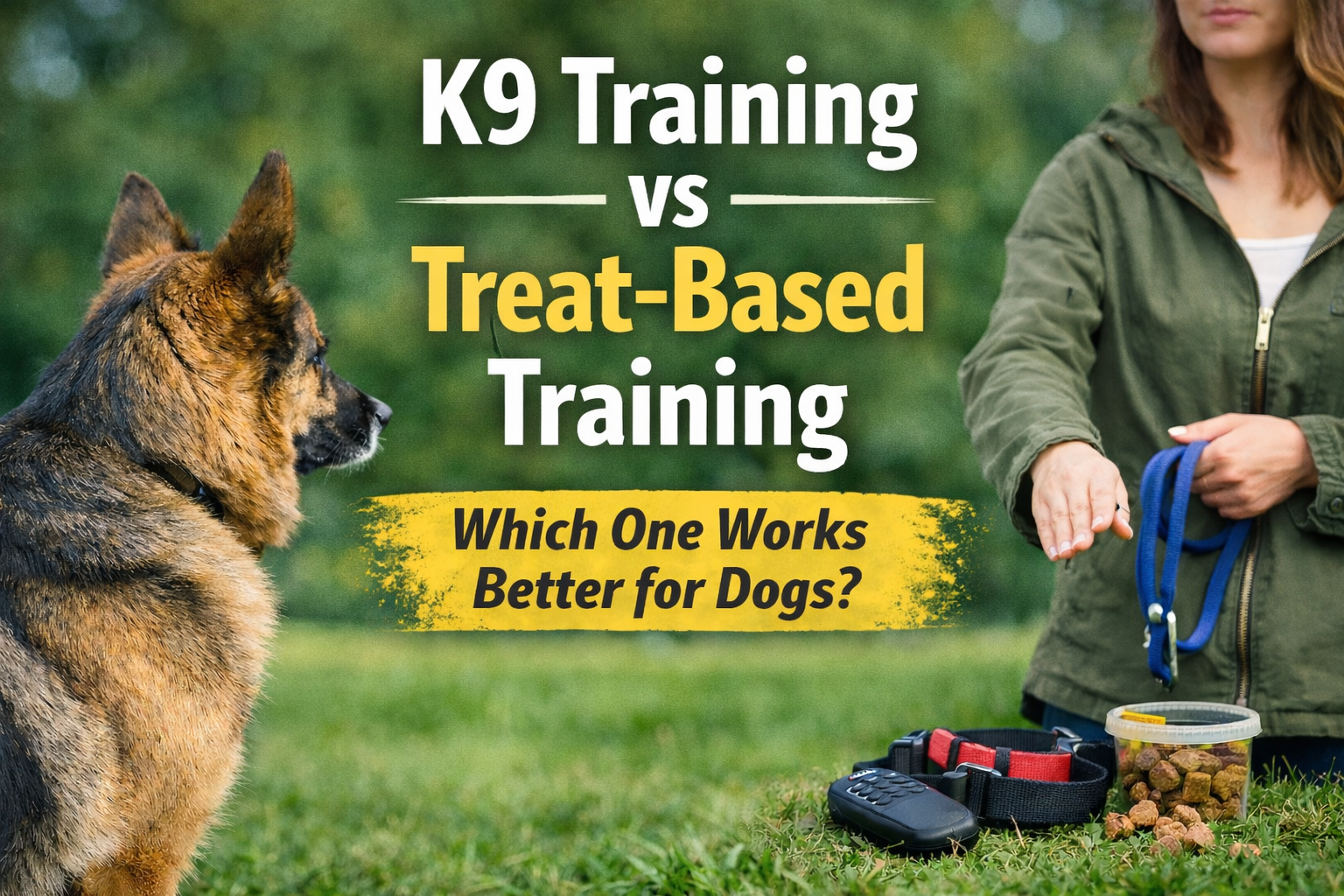
K9 Training vs Treat-Based Training: Which Works Better?

Dog training has never been more confusing. One trainer says “use treats for everything,” while another swears by K9-style training built on structure and discipline. So which one actually works better?

If you’ve tried treat-based training and your dog still ignores commands, pulls on the leash, or only listens when food is visible, you’re asking the right question.

Let’s break down K9 training vs treat-based training, how each works, and which method delivers long-term obedience.

What Is Treat-Based (Positive Reinforcement) Training?

Treat-based training rewards dogs with food when they perform a desired behavior. It’s commonly used for:

  • Puppies

  • Basic commands

  • Early socialization

✅ Pros of Treat-Based Training

  • Easy to start

  • Gentle and positive

  • Useful for teaching simple behaviors

❌ Cons of Treat-Based Training

  • Dogs may only listen when treats are present

  • Creates dependency on food

  • Often fails in high-distraction environments

  • Less effective for stubborn or dominant dogs

Many owners notice that once treats are removed, obedience disappears.

👉 This is one of the reasons dogs begin ignoring commands over time, especially without structure.

What Is K9 Training?

K9 training is based on methods used for working dogs. Instead of relying on food, it focuses on:

  • Leadership

  • Structure

  • Clear communication

  • Consistency

Dogs learn to obey commands because they understand expectations, not because they’re chasing rewards.

Why K9 Training Often Works Better

1. Builds Real Obedience

K9 training teaches dogs to respond reliably — even without treats, toys, or constant praise.

This is crucial for:

  • Recall (“come”)

  • Leash walking

  • Off-leash obedience

2. Works in Real-Life Situations

Treat-based training often fails outdoors or around distractions.

K9 training is designed for:

  • Parks

  • Walks

  • Visitors

  • Other dogs

Dogs learn to listen no matter what’s happening around them.

3. Helps With Behavior Problems

K9 training is especially effective for:

  • Stubborn dogs

  • Excessive barking

  • Jumping

  • Aggression

  • Anxiety-related behavior

Because it focuses on leadership and structure, many behavior issues improve naturally as obedience improves.

4. Reduces Reliance on Treats

Treats can still be used — but they’re no longer required for every command.

This creates:

  • Calm, confident dogs

  • Clear boundaries

  • Better long-term results

Which Training Method Is Better for Your Dog?

Here’s the honest answer 👇

Treat-Based Training is better if:

  • You have a young puppy

  • You’re teaching basic commands

  • Your dog is highly food-motivated

K9 Training is better if:

  • Your dog ignores commands

  • Treats stopped working

  • Your dog pulls, barks, or shows dominance

  • You want reliable obedience

Many owners actually start with treats and transition to K9-style training for lasting results.

Can You Do K9 Training at Home?

Yes — and that’s why K9 training has become so popular.

Modern K9 programs are designed for dog owners who want:

  • Step-by-step guidance

  • At-home training

  • Clear routines

  • Real results without guesswork

👉 If you’re looking for a proven K9 training system you can follow at home, this structured program explains everything clearly:
👉 Join free K9 training workshop here.

Final Verdict: K9 Training vs Treat-Based Training

Treat-based training can teach commands.
K9 training teaches obedience.

If you want your dog to listen consistently — not just when food is involved — K9 training delivers stronger, long-term results.

Post Comment

Review Your Cart
0
Add Coupon Code
Subtotal