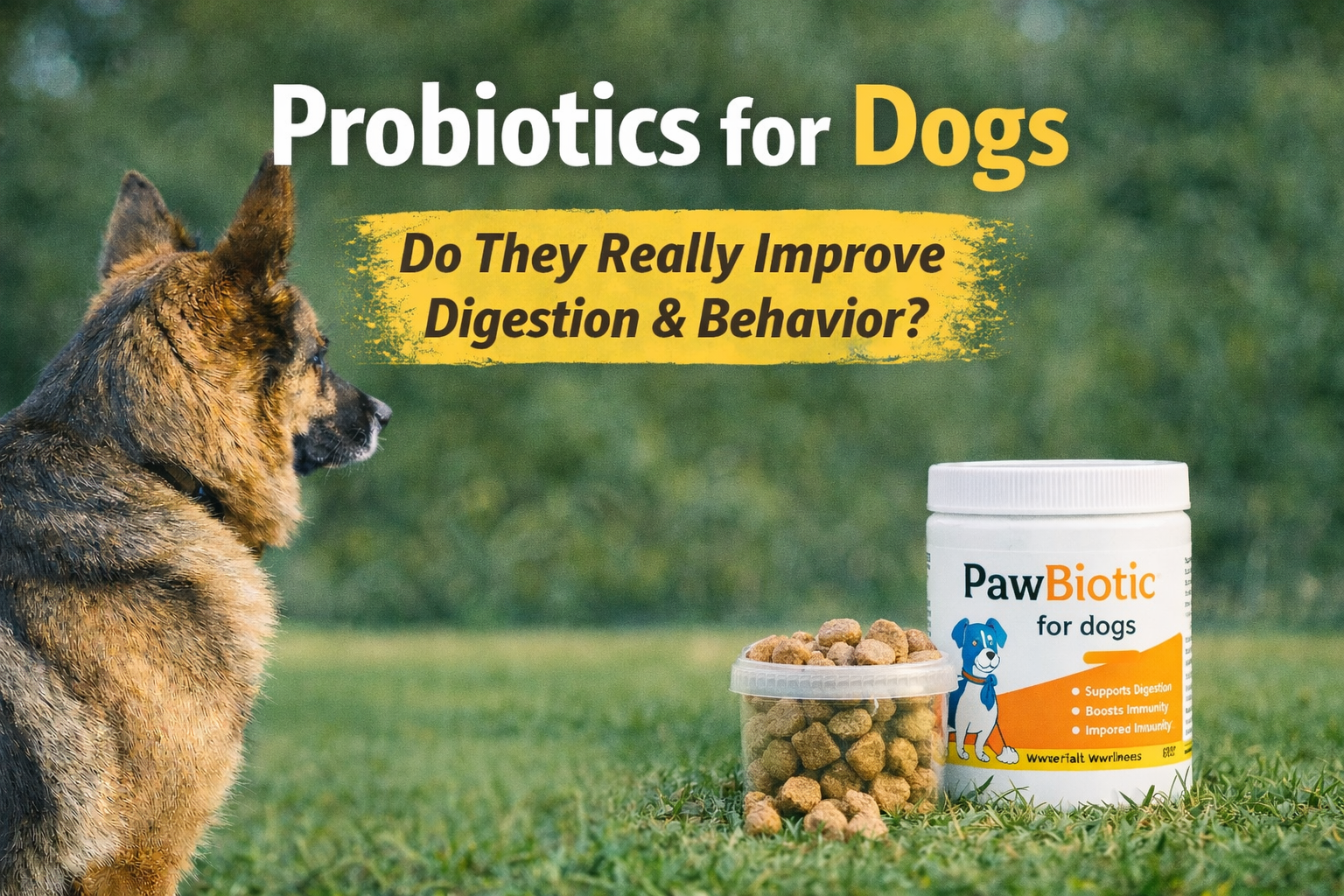
Probiotics for Dogs: Do They Really Improve Digestion and Behavior? February 14, 2026 by admin If your dog struggles with digestive issues, itchy skin, low energy, or even anxiety, the problem may not be training at all — it could be gut health.More dog owners are now asking an important question:Do probiotics for dogs actually work?In this guide, we’ll explain what dog probiotics do, how they affect digestion and behavior, and whether they’re worth adding to your dog’s routine. What Are Probiotics for Dogs? Probiotics are beneficial bacteria that support a healthy gut. In dogs, they help:Balance digestionImprove nutrient absorptionStrengthen immunityReduce inflammationA healthy gut plays a much bigger role in your dog’s overall behavior than most owners realize. Signs Your Dog May Need Probiotics Your dog may benefit from probiotics if they experience:Frequent diarrhea or soft stoolsExcessive paw licking or itchingGas or bloatingAnxiety or nervous behaviorPoor appetite👉 Many of these symptoms are often blamed on food or training — when the real issue starts in the gut. How Gut Health Affects Dog Behavior The gut and brain are closely connected through what’s known as the gut-brain axis.When a dog’s gut is unhealthy, it can lead to:Increased stressIrritabilityPoor focus during trainingLow energyThis is why some dogs struggle with obedience even during proper training. “Why Your Dog Ignores Commands” Can Probiotics Improve Training Results? Yes — indirectly.A dog with a healthy digestive system is:CalmerMore focusedMore receptive to trainingThat’s why many trainers recommend addressing nutrition and gut health alongside training, especially for anxious or stubborn dogs. “Best Dog Training Methods for Stubborn Dogs” Do All Dog Probiotics Work the Same? No. Quality matters a lot.A good dog probiotic should:Be specifically formulated for dogsContain multiple beneficial strainsBe easy to administer dailyAvoid unnecessary fillers👉 PawBiotix is designed specifically to support dog digestion, immunity, and overall wellness, making it a popular option among dog owners looking for gut health support. Shop Pawbiotix for your dog here Probiotics vs Dog Food Alone Even premium dog food may not be enough because:Processing kills natural bacteriaStress and antibiotics disrupt gut balanceAge reduces digestive efficiencyThis is why probiotics are often used as a daily supplement, not a replacement for food. Are Probiotics Safe for Dogs? For most dogs, probiotics are:SafeNon-habit formingSuitable for long-term useHowever, always:Start with recommended dosageMonitor stool consistencyConsult a vet if your dog has medical conditions Final Verdict: Are Probiotics Worth It for Dogs? If your dog struggles with digestion, itching, anxiety, or inconsistent behavior, probiotics can make a noticeable difference.They won’t replace training — but they can support better focus, calmness, and overall health, making training more effective.👉 For dog owners looking to support gut health naturally, PawBiotix is a practical option to consider. Shop Pawbiotix for your dog here