
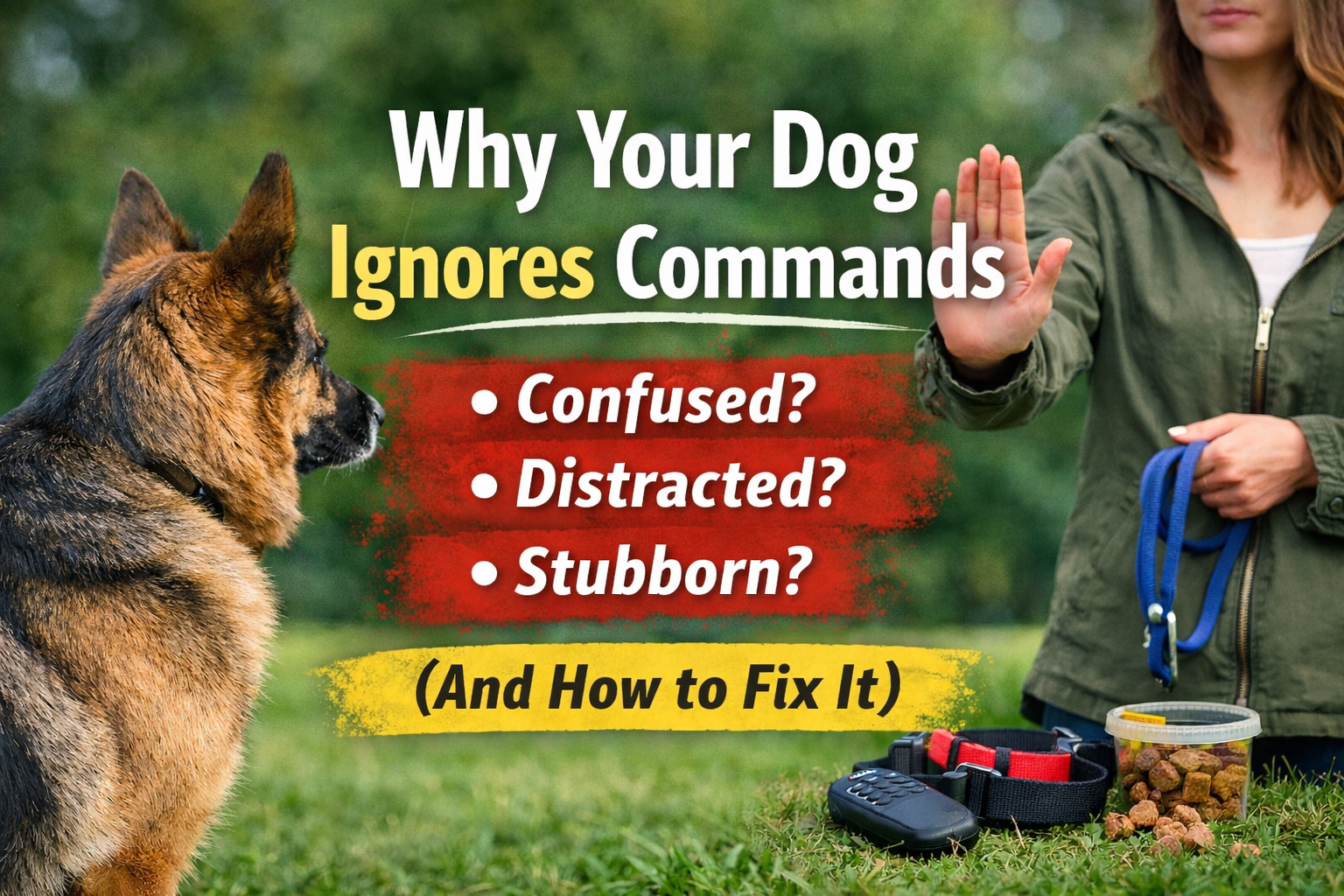
Does your dog ignore you when you call their name? Sit only when treats are visible? Or act like they’ve “forgotten” everything they learned?
You’re not alone — this is one of the most common frustrations dog owners face.
The good news? Your dog isn’t being stubborn or disrespectful. In most cases, they’re confused, overstimulated, or poorly trained in a way that doesn’t stick. Let’s break down why dogs ignore commands and, more importantly, how to fix it.
Many owners assume their dog understands a command just because they respond sometimes. In reality, dogs learn through repetition, clarity, and consistency.
Common mistakes:
Changing words (“come”, “come here”, “c’mon”)
Inconsistent tone
Practicing only at home, not outside
Use one command, one tone, every time. Practice commands in different environments so your dog learns to obey regardless of distractions.
Dogs don’t generalize well. A dog that listens in the living room may completely ignore you at the park.
Why?
New smells
Other dogs
People, noises, movement
Train gradually:
Start indoors
Move to the yard
Then public places
Structured training systems (like K9-style training) focus heavily on obedience under distraction, which is where most dogs fail.
If your dog only listens when food is involved, the problem isn’t your dog — it’s the training method.
Treat-based training often creates dogs who ask:
“What’s in it for me?”
Treats should be a reward, not a requirement. Your dog should listen because they understand the command and respect leadership — not because food is present.
This is why many owners switch to structured obedience training that builds discipline instead of bribery.
Dogs are pack animals. When leadership is unclear, dogs make their own decisions — including ignoring you.
Signs of poor structure:
Dog decides when to listen
Pulls on leash
Ignores recall
Pushes boundaries
Dogs thrive on clear rules and routine:
Consistent commands
Clear boundaries
Calm, confident handling
Training systems based on K9 principles focus on leadership, structure, and clarity, which helps dogs respond reliably.
Training once in a while won’t work. Dogs need repetition.
Problems caused by inconsistency:
Confusion
Selective listening
Slow progress
Short, daily sessions (10–15 minutes) are far more effective than long, irregular ones. Consistency builds habits — and habits create obedience.
Yes — especially for:
Stubborn dogs
High-energy breeds
Dogs that failed basic training
Owners who want reliable obedience
K9 training focuses on: Clear communication
Obedience without constant treats
Respect and leadership
Real-world results
If you want a structured K9 training program you can follow at home, check out this proven option here:
Join K9 free dog training workshop here.
If your dog ignores commands, it doesn’t mean they’re “bad” or untrainable. It usually means the training method isn’t working for your dog.
With consistency, structure, and the right approach, any dog can learn to listen — even stubborn ones.
Post Comment